
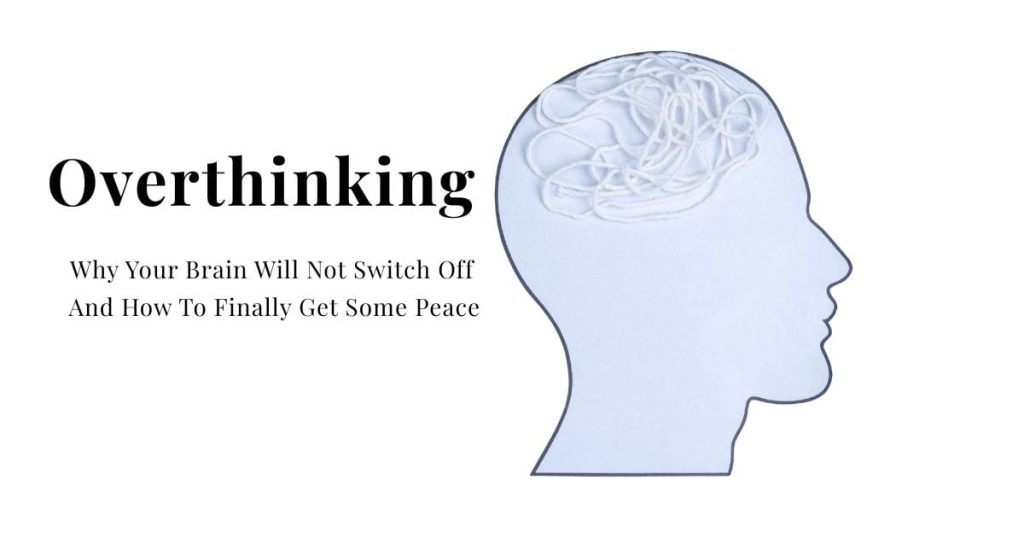
Overthinking: Why Your Brain Will Not Switch Off And How To Finally Get Some Peace
This week a few clients asked me some quick-fire questions about overthinking, and it reminded me how common it is. So instead of a longer deep dive, I have put together a shorter blog that gets straight to the point and answers the things people usually want to know first.
If you have ever found yourself replaying a conversation from days ago, imagining every possible outcome of tomorrow’s meeting, or lying awake at 2am thinking about something you said in passing, you are in familiar territory. Most people do this far more than they admit. Modern life gives us endless things to worry about, and our brains have not caught up with the pace of it all. Sometimes it feels like your mind is doing its own thing and you are just along for the ride.
The important thing to remember is that overthinking is not a personal failing. It is simply a pattern your mind has learned over time. And patterns can change, even if they feel stubborn or a bit glued in place.
Why We Overthink And Why It Feels So Compulsive
People often ask why they overthink so much, usually with a bit of frustration, because it feels irrational. But overthinking is your mind trying to keep you safe. When your nervous system senses uncertainty, it pushes you into analysis mode. It is trying to help, even though it does not feel helpful. It is a bit like your brain saying, “Let me just check this one more time,” even though you have already checked it ten times.
The trouble is the loop. You think more, you feel more anxious. You feel more anxious, you think more. It is like being stuck in your own head with no exit sign.
Common triggers include:
Overthinking at night when everything finally goes quiet
Overthinking relationships because you are worried about misreading someone
Overthinking decisions because you want to get things right
Overthinking health when you feel vulnerable or unsure
Overthinking is rarely about the topic itself. It is almost always about the feeling underneath. Fear, uncertainty, a need for control. Something that feels unsettled. Sometimes you do not even know what the unsettled thing is, you just feel it.
The Hidden Cost of Overthinking
A lot of people do not realise how much overthinking affects them until they start noticing the signs. It drains your energy. It makes simple tasks feel heavier. It can make you feel like you are constantly behind, even when you are not. You might find yourself staring at your phone or your laptop, knowing you need to do something, but your brain is too busy running its own internal commentary.
It can also:
Disrupt sleep
Increase anxiety
Reduce confidence
Create procrastination
Affect relationships
Make decisions feel impossible
And the biggest cost of all is that it keeps you living in your head instead of your actual life.
What People Really Want To Know: How Do I Stop Overthinking?
This is the question everyone searches for. And the answer is not to think positively or to “just stop”. If it were that simple, nobody would struggle with it. The real work is learning to interrupt the loop. Not perfectly, just enough to get a bit of breathing space.
1. Get out of your head and into your body
Overthinking happens in the mind, but the quickest way out of it is usually physical. A walk, a stretch, a cold splash of water, a few slow breaths. Anything that shifts your nervous system. It does not need to be dramatic. Even standing up and moving around can help. Sometimes the smallest physical shift creates the biggest mental change.
2. Reduce the open tabs in your mind
Night-time overthinking often appears when you finally stop. All the things you have not dealt with during the day start queuing up. A simple brain-dump before bed can make a surprising difference. It is not about solving anything, just clearing the mental clutter. Even writing down something tiny like “email Sarah” can calm your mind more than you expect.
3. Replace rumination with action
Overthinking thrives when nothing is happening. Ask yourself what one tiny step you can take. Not the perfect step, just a step. Action creates clarity. Thinking does not. You do not need to fix the whole thing. You just need to move it forward by one notch.
4. Challenge the illusion of certainty
Most overthinking is an attempt to predict the future. But certainty is not real. Instead of asking what will happen, try asking what you will do if it happens. It shifts you from fear to capability. It is a small change, but it is powerful. It reminds your brain that you can handle things, even if they are not predictable.
5. Learn to tolerate discomfort
This is the part nobody likes, but it is the part that works. Overthinking is a coping mechanism for uncomfortable emotions. When you learn to sit with discomfort, even for a short moment, the urge to overthink loses some of its grip. You do not need to enjoy the discomfort. You just need to survive it for a few seconds.
Overthinking In Relationships
Overthinking in relationships has become incredibly common. Digital communication is quick, unclear and missing all the usual cues. Without tone or facial expression, your brain fills the gaps, and it usually fills them with the worst-case scenario. You might find yourself rereading a message, trying to decode it like it is a puzzle.
If you are overthinking a message or a pause or a change in tone, remember that your brain is trying to protect you. But protection is not the same as connection. Sometimes the simplest thing is to ask, check or clarify. It feels awkward, but it is usually far easier than the hours of spiralling.
Finding Steadiness After a Distressing Event
After a sudden, deeply upsetting event, a client found herself caught in spirals of overthinking and self‑doubt. Outwardly she was functioning, but inside her mind felt chaotic and heavy. Through gentle RTT® work, she began to understand why her thoughts had become so relentless, and how her nervous system was trying to protect her. As she reconnected with a calmer sense of safety, her thinking softened, and she started to feel more grounded and capable again.

Night-Time Overthinking: Why It Hits Hardest
When the world goes quiet, your mind gets louder. It finally has space to process everything you pushed aside during the day. This is why problems feel bigger at night. Your brain is tired, emotional and not in problem-solving mode.
A simple rule: don’t try to solve anything at night. Your brain is in emotional mode, not logical mode. Write it down, promise yourself you will look at it tomorrow, and let your nervous system settle.
Final Thought
Overthinking is not who you are. It is something your brain learned to do. And anything learned can be unlearned. The goal isn’t to stop thinking, it’s to stop spiralling.When you build internal safety, clarity becomes more natural, decisions feel lighter and your mind finally gets some quiet.
Ready to stop the spirals and feel steadier again?
If overthinking has been taking over, gentle RTT® work can help you find calm and reconnect with yourself.
RTT® hypnotherapy to ease overthinking, calm spiralling thoughts and help your mind feel steadier. Gentle online sessions to support clarity, confidence and a calmer nervous system.

About the Author
Joanna Jewitt is a Clinical Hypnotherapist and Advanced RTT® Practitioner who specialises in helping thoughtful, high‑functioning people understand and shift the patterns that keep them stuck. Trained personally by Marisa Peer, she blends RTT® hypnotherapy with a calm, collaborative, client‑centred approach. Joanna supports clients across the UK and worldwide through online sessions, helping them build lasting clarity, confidence, and a deeper sense of inner safety.
Related Services
Therapy for anxiety, overthinking and a mind that will not switch off Explore how RTT® hypnotherapy can help calm persistent worry, ease overthinking and restore a sense of steadiness.
Related Case Study
- Case Study: Transforming Imposter Syndrome and the Inner Critic How RTT® helped a client soften lifelong self‑criticism and rebuild genuine self‑trust.
Related Articles
Overcome Negative Mindset & Rebuild Your Confidence | RTT® Hypnotherapy Reframe your thoughts, boost resilience and heal with RTT®. Discover how to move from autopilot thinking to genuine clarity.
When Your Nervous System Turns a Quiet Moment Into an Emergency | Fear‑Response Hypnotherapy When ordinary moments trigger fear or panic, it can feel exhausting. Here is why it happens and how to calm the response.
How to Choose an Online Hypnotherapist for Anxiety and Confidence A practical guide to finding the right online hypnotherapist and what to look for when choosing support.